K180
  • Home
    • K180 French
    • K180 Testimonies
  • THE STREETS
    • Ealing Street Ministry
    • Big 6
    • Euro Street Teams >
      • Czech Republic
      • France
      • Iceland
      • Italy
      • Slovenia
      • Spain
      • UK
    • Monopoly Mission >
      • London GO
      • Allez Paris
    • On The Streets Conference
    • The Journey
    • Help Train Your Church
  • Evangelists
    • Behold Europe
    • Emerging Evangelists' Institute >
      • EEI UK
      • Eldhugar Iceland
      • RJEF
      • PN Germany
      • RedTimoteo
      • Albania
      • Lisbon
    • K-Accelerate
    • Kschool
    • Trainees
    • Unashamed Course >
      • Unashamed Course English >
        • Upcoming courses
        • Unashamed subscribe
        • Register your Course
      • Unashamed Course French >
        • Cours a venir
        • Unashamed s'abonner
        • Inscrivez votre cours
      • Unashamed Course Spanish >
        • Proximos Cursos
        • Unashamed suscribirse
        • Inscriba su curso
    • Unashamed+ >
      • Unashamed+ meetings
  • HistoryMakers
    • HM Overview
    • Bold Obedience Walk
    • HM Europe Summit
  • Donate
  • Store
  • About us
    • About us
    • Mission and Beliefs
    • News
    • Subscribe
    • Contact Us

“I got soul, but I'm not a soldier…” - The Iron Giant (1999)

11/23/2020

1 Comment

 
Picture

Please note: The following text contains spoilers. Viewer discretion is also advised – this film is rated ‘PG’. For more details on the film’s content, read Focus On The Family’s Plugged In Review: http://www.pluggedin.com/movie-reviews/irongiant

Hogarth Hughes: "It's bad to kill. Guns kill. And you don't have to be a gun.
You are what you choose to be. You choose. Choose.
"

In August 1999, the animated contemporary classic The Iron Giant, opened in
U.S. markets to many favourable reviews from critics. Rotten Tomatoes’ consensus summarised them thusly: “The endearing Iron Giant tackles ambitious topics and complex human relationships with a steady hand and beautifully animated direction from Brad Bird”. Sadly, such high praise is rarely spoken of an animated film – the Despicable Me’s and The Emoji Movie’s of the film world are usually preoccupied with being harmlessly cutesy, and not providing audiences (both children and adults alike) with artful ruminations on what it means to be alive, possess a soul and how one can become ‘good’. (And to some extent, that’s understandable.) The Iron Giant, however, offers all of this and more, in what the late great Roger Ebert described as “a Cold War parable”, “in which the Iron Giant learns from a little boy that he is not doomed to be a weapon”, because "you are what you choose to be" – naturally an important sentiment for
​children to learn, but one which is also held by God, in His word, the Bible...  

​​Set in 1957 America, at the height of the Cold War, The Iron Giant introduces us to the adventurous Hogarth (voiced by Eli Marienthal) - a nine-year-old who lives with his mother Annie (Jennifer Aniston), in the quiet town of Rockwell, Maine. One night, a 50-foot robot mysteriously descends from the skies and plummets into the nearby sea. He soon awakes, and wanders into Rockwell – led by a seemingly insatiable desire for nutritious metal to munch upon. Not content with chomping tractors in half, the Giant fancies himself a TV antenna - Hogarth’s TV antenna in fact, which displeases him greatly. Excited by tales of extra-terrestrial lifeforms and frightened by the educational “Duck and Cover” films shown in school, Hogarth is nonetheless determined to investigate this strange occurrence, which leads him to discover the Giant attempting to consume a power station. Saved from electrocution by Hogarth, the Giant assumes duties as Hogarth’s protector, who in turn must protect his ginormous friend from prying government eyes…
 
Throughout the course of the film, we come to learn more of the Giant’s backstory and of his defensive system (particularly in the 2015 signature cut which reveals the Giant is a soldier), which when employed, may yield potentially catastrophic results. It turns out that the Giant is armed to the teeth with deadly, futuristic weaponry, hidden beneath his friendly outer shell. Unaware of his world-ending capabilities (he has a case of robotic amnesia), the Giant is mostly pacifistic in nature and only uses his might to protect Hogarth. This behaviour is encouraged by his wise young friend at a pivotal moment – discovering a deer who was shot and killed by hunters, in the woods. The pair mourn for the creature, and Hogarth explains the concept of death to the initially bemused robot, noting that such a beautiful thing was killed using a gun. The Giant learns that the use of guns brings only death and misery, with Hogarth gently reinforcing that peaceful resolutions must be sought over violence. Such wise teaching positively impacts the Giant’s behaviour, but when attacked by government forces, the Giant falls once more into a trance-like state, in which his violent programming threatens to take over completely. In one moment, having destroyed many government vehicles, he eventually comes to stand before Hogarth, poised to vaporise him. But Hogarth petitions him: “It's bad to kill. Guns kill. And you don't have to be a gun. You are what you choose to be. You choose. Choose.” Remarkably, the Giant overrides his programming, returning himself back to his gentler, more loving side. It’s one of the film’s many, beautiful moments, and one which reminded me of how the Bible teaches that humanity, like the Giant, has free will and doesn’t have to obey its own sinful, destructive programming.

​
Picture

​​For the Bible teaches that humanity possesses an inherently sinful nature, one which has the power to manifest itself in every part of our lives. Our bodies are “sinful flesh” according to Paul, writing in Romans 8:3 (ESV). We have within us “earthly” desires, which leads us to indulge within “fornication, impurity, passion, evil desire(s), and greed” (Colossians 3:5, NRSV). As a result of this sinful nature, our lives are not exactly our own – we are “enslaved to sin” (Romans 6:6, NRSV) and are destined to live a life in which our sinful nature dictates who we are, what we do and who we become. In fact, our ‘programming’ is so ingrained within us, that we cannot override these evil desires as the Giant did.
 
But there is hope, as the Giant managed to circumvent his programming when he learnt and called to mind the following: We all possess a precious soul within us that must be cared for, and we can make a decision to/be taught to turn away from our destructive ways. How is this possible? The Bible teaches that each of us possesses a soul, an invisible part of our being that lives on for eternity, even after the body experiences death. Hogarth affirms this: if “you have feelings, and you think about things… that means you have a soul”. The Giant, whilst made of metal, is in fact sentient – he has feelings and ponders some of life’s biggest questions with Hogarth. The film, however, is vague on where these souls come from. But the Bible teaches that God is the one who “made our very souls” (Jeremiah 38:16, NKJV) and they are designed to return to Him upon our departing from this earth.
 
However, they can be destined for one of two eternal destinations – Heaven, with God our Father, or Hell, completely separated from our Creator. Sadly, our sinful programming dictates that we are destined to be separated from God’s loving arms – “For the wages of sin is death” (Romans 6:23, NIV). If we don’t overcome the darkness which pervades from our lives, we will not only experience physical death, but a spiritual one too. But God has made a way for sinful souls to be cleansed, to give us an opportunity to acknowledge our own sinfulness and accept God’s gracious gift of forgiveness, which leads to eternal life. He achieved this in sending His one and only Son to earth, giving Him over as a sacrifice in our place (taking the punishment we deserved and our sin upon Him). He was crucified on the cross as the “…offering for our sin”, so “that we could be made right with God through Christ” (2 Corinthians 5:21, NLT).

​
Picture

​So, are we able to learn how to overcome our sinful nature? Hogarth says that we have the ability to choose, quite simply, whether we’re good or bad. In a sense, he’s correct. But the Bible teaches that we cannot redeem ourselves alone. For every stand we make against our sin, we cannot destroy its effects in the present, or the eternal, and hope to be freed from it. No, to be righteous in the sight of God, it requires us to make a choice which starts with Christ. For when we choose to follow Jesus, he gives us a new nature: “…if anyone is in Christ, the new creation has come: The old has gone, the new is here!” (2 Corinthians 5:17, NIV). And He fills us with his Holy Spirit which gives us the ability to choose to act righteously, instead of giving in to our sinful desires: “…walk by the Spirit, and you will not gratify the desires of the flesh.” (Galatians 5:16, NIV). It is only through Jesus doing a work in us, that we may pursue positive change in our lives. For once we have encountered who Christ is, we naturally will not want to do the bad, but only focus upon the good. It is in Christ alone, that our ‘programming’ is completely rewired, and we go on to experience “life…to the full” (John 10:10, NIV) with Him.
 
Challenge:
 
Why not prayerfully invite a friend or family member who doesn’t yet know Jesus, to watch The Iron Giant for themselves? Use the film’s themes to ask them what they thought of the film, if they spotted any links to Christianity and what they might think of the Gospel’s response to this subject.

If you feel able to, ask them what they think about Hogarth’s idea of what it means to possess a soul. Think: Is it real? Can it be seen? Do you have one? Or is it for only good people? Prompt them to consider their own soul, asking if they have an idea where their soul will end up, some day. Also, breach the subject of choice with them. Do they believe they have free will, and are they using it for good? Later, if they're open to hearing it, take an opportunity to share the hope of the Gospel message with them, mentioning the fact that we have abused our free will and cannot become ‘good’ without Christ’s help. To end, share with them about the unconditional love and forgiveness that is found in a relationship with Christ.

Prior to watching the film for yourself, however, take a moment to pray that God would speak to you through the film. If you feel comfortable, pray this prayer over all of your future, film-watching experiences:
 
Dear Lord, as I watch this film, I ask that you would be present here with me. Highlight to me anything within it that is honourable, anything that can be used in conversation for your Kingdom purposes. Amen.
 
The Iron Giant is available to rent through Amazon Prime Video and YouTube Movies (in the UK).
​
1 Comment

Destination: Life. Status: Delayed - The Terminal (2004)

11/16/2020

0 Comments

 
Picture


Please note: The following text contains spoilers. Viewer discretion is also advised – this film is rated ‘12’. For more details on the film’s content, read Focus On The Family’s Plugged In Review: The Terminal.

Frank Dixon: “…you don't qualify for asylum, refugee status, temporary protective status, humanitarian parole, non-immigration work travel visa… You at this time are simply…"unacceptable".”


​To this day, I continue to maintain that Steven Spielberg’s The Terminal is a Christmas film. Am I able to provide evidence to substantiate my claim? To some extent, yes – even in spite of the film not being explicitly set at Christmas. When commenting upon the reoccurring themes of director Frank Capra’s critically lauded filmography, film author Richard Griffith summarised them thusly: A “messianic innocent ... pits himself against the forces of entrenched greed. His inexperience defeats him strategically, but his gallant integrity in the face of temptation calls for the goodwill of the "little people", and through their combined protest, he triumphs”. Such motifs are present within Capra’s It's a Wonderful Life (1946) and have continued to influence generations of Christmas films after it – from the heart-warming, to the unapologetically whimsical. The Terminal is the collective embodiment of Capra’s favourite subjects, lovingly wrapped up in the spirit of the Christmas season. But it serves a greater purpose to us today, in bringing us far more than festive cheer, but a timely message with strong links to the hope of the Gospel message.

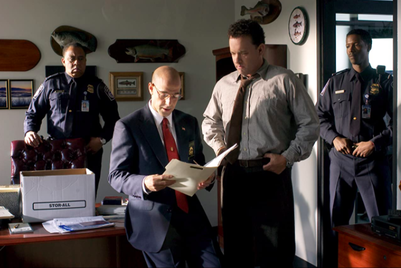
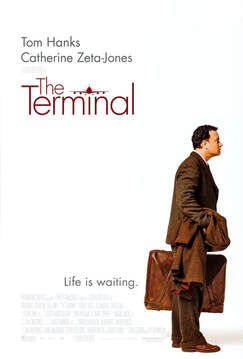
​The Terminal chronicles the tale of one Victor Navorski (Tom Hanks), an Eastern European man who learns that whilst en route to JFK airport, his country entered into a state of political unrest. Following the destabilisation of his homeland’s government and the outbreak of conflict, Victor’s passport and visa are revoked, and he is forced to remain in the airport by the vindictive, self-serving bureaucratic customs officer, Frank Dixon (Stanley Tucci). Much to Victor’s bewilderment, Frank informs him that he is stateless and must settle in at the terminal for the duration. Treated harshly by airport officials and terminal staff, without a place to rest his head, and anxious about the uncertain future of his country, Victor struggles to adapt to this highly irregular life within the terminal. But, chance encounters with cheery outsiders such as himself, might just help to see him through…
 
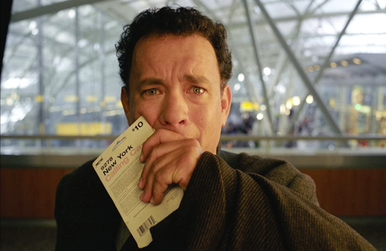
Previous to writing this article, my recollection of The Terminal largely consisted of Hanks’ Victor acting non-plussed for the majority of the film’s runtime. And to some extent, I’m not wrong. Spielberg and his screenwriters know how to write Victor, a fish out of water, into some highly amusing situations – not least when an unassuming passenger asks Victor with a heavy sigh, “Do you ever feel like you’re living in an airport?”. However, I forgot just how much pathos Hanks imbues within the character, particularly in a scene in which Victor realises that his (fictional) nation of Krakozhia is at civil war. Victor, a non-English speaker, cannot understand the news reports he sees on the terminal’s televisions, and when he tearfully begs passers-by to help translate for him, he is only ever brushed aside. To make matters worse, customs officer Frank labels Victor’s visa status “unacceptable”, but we can’t help but feel in the moment, that by Frank’s actions and attitudes, he finds Victor to be just that. These scenes are emotional, not least because they resonate with audiences in 2020, when the plight of refugees is such a disturbing reality. Of course, this is a more sanitised version of so many refugee stories, but there is something so genuinely painful about Victor’s struggle. For the most part, we forget that we’re watching Tom Hanks and instead see a man who is stateless, robbed of his identity and scared. 
​
Picture

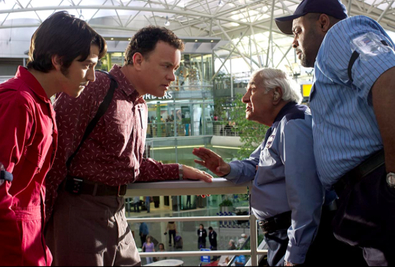
​In turn, Victor’s refugee story unexpectedly brought to mind the plight of the Israelites, who suffered oppression due to their enslavement within Egypt. Foreigners in a far-off land, the Israelites were treated cruelly as refugees – forced to work as captives in a land they could never call home. Whilst Victor is never enslaved throughout the course of the film (he is inadvertently employed at one point, however), he is oppressed. Those who work within the terminal’s shops insult, laugh or ignore him, either because they don’t take the time to understand Victor, or they’re just ‘too busy’ to acknowledge him as someone who requires basic human rights. Frank’s actions are far worse, however. Throughout the course of the film, he uses condescending language/tone, gives Victor insufficient supplies and makes it his personal vendetta to rid the terminal of Victor, without once trying to understand him. In Exodus 23:9 (NLT), God specifically instructs his people, the Israelites, not to conduct themselves in this way: “You must not oppress foreigners. You know what it’s like to be a foreigner, for you yourselves were once foreigners in the land of Egypt.” Following Him liberating the Israelites from their captivity, it was God’s desire for the Israelite people to live their lives as He does, imitating His holy behaviour in every way. They were to be a people whose righteousness clearly set them apart from the evil practices of their time, and ultimately spoke to the righteous way in which God acts – generally and towards humanity.
 
Rather than treat them as outcasts, therefore, God called for the Israelites to treat foreigners or refugees as citizens among them, and to do so with love. In fact, they were instructed to: “Treat them as you would an Israelite, and love them as you love yourselves. Remember that you were once foreigners in the land of Egypt. I am the Lord your God.” (Leviticus 19:34, GNT). But God’s desired treatment of foreigners and refugees went further than that, when God commanded the Israelites to Invite them to be a part of their community. Living by God’s holy Law meant that foreigners were to be included in all aspects of the Jewish community, including provisions for them to be treated equally under the law and to even be included in festivals and celebrations of the community (Deuteronomy 14:28-29, 16:14, 26:11).
​
Picture
By the film’s end, we see many unlikely characters come to embody this behaviour for themselves. Even the most hardened of hearts warm to Victor, inviting him into their communities by feeding him and treating him as one of their own. Some, like the Israelites, even understand what it means to be a foreigner, and strive to help Victor at his point of greatest need, which is to liberate him, by helping him to leave the airport. But the Bible later teaches in the New Testament that we, like Victor, need to be met at our point of greatest need – one which goes beyond the physical, to the spiritual: to be liberated from the grip of sin. For the Bible teaches that in the eyes of God, humanity is in “slavery to sin” (Romans 6:18, NLT). When we choose to live our lives apart from God, doing whatever, whenever we choose to do so, we become foreigners and strangers to Him – held in captivity by the darkness we engage with. But God in His great mercy wishes to free us from that place of captivity, and welcome us all, foreigners and strangers alike, into His loving community. But how do we know this? In His word, God promises that we can be saved by putting our complete hope, trust and faith in Jesus: “…it is by God's grace that you have been saved through faith. It is not the result of your own efforts, but God's gift…” (Ephesians 2:8-10, GNT). For whilst we have done wrong in God’s eyes by living for ourselves, He “has shown us how much he loves us” in sending Christ to die for us, taking the punishment that we deserved when He was crucified on the Cross, even “while we were still sinners” (Romans 5:8, GNT). Through His perfect sacrifice, Jesus has given us the opportunity, “by the Spirit”, to “put to death your sinful actions”, so that “you will live” (Romans 8:13, GNT) forever in relationship with Him. 
 
So, when we choose to no longer live as foreigners and strangers to God, and come into friendship with Him, He welcomes us into relationship – a perfect friendship which saves us from eternal death in Hell and gives us the gift of eternal life spent in Heaven with Him (“For “everyone who calls on the name of the Lord will be saved.””, Romans 10:13 – ESV). When we put our faith in him, we become part of God’s community. You are “…not foreigners or strangers any longer; you are now citizens together with God's people and members of the family of God.” (Ephesians 2:19, GNT). Such wonderful truths encourage me, as a Christian, in the knowledge that I can and should identify with the idea of not belonging, as the reason why I treat refugees or displaced people without discrimination. For in His perfect, loving kindness, God did not ignore me or my fellow Christians, even though I had done wrong in His eyes. So, we too must share that same kindness with others today.
Picture
Challenge:
 
Why not prayerfully invite a friend or family member who doesn’t yet know Jesus, to watch The Terminal for themselves? Use the film’s themes to ask them what they thought of the film, if they spotted any links to Christianity and what they might think of the Gospel’s response to this subject.

If you feel able to, ask them what they think about Victor and his mistreatment by those within the terminal. How does that make you feel as someone who might have missed the foreigner/stranger in need? Prompt them to consider the characters’ lack of compassion – how would they respond to the situation if they worked in the terminal? Later, if they're open to hearing it, take an opportunity to share the hope of the Gospel message with them, mentioning the fact that Victor was eventually shown unconditional kindness, despite the terminal and America, not being his home. To end, share with them about the unconditional love and forgiveness that is found in a relationship with Christ.

Prior to watching the film for yourself, however, take a moment to pray that God would speak to you through the film. If you feel comfortable, pray this prayer over all of your future, film-watching experiences:
 
Dear Lord, as I watch this film, I ask that you would be present here with me. Highlight to me anything within it that is honourable, anything that can be used in conversation for your Kingdom purposes. Amen.
 
The Terminal is available to stream on Netflix (UK).

0 Comments

Take A Walk On The Wild Side - Fantastic Mr. Fox (2009)

11/9/2020

1 Comment

 
Picture


Please note: The following text contains spoilers. Viewer discretion is also advised – this film is rated ‘PG’. For more details on the film’s content, read Focus On The Family’s Plugged In review.
 
Mrs. Fox: “Twelve fox-years ago you made a promise to me . . . you would never steal another chicken . . . and I believed you. Why? Why did you lie to me?”
 
Mr. Fox: “Because I’m a wild animal."


​
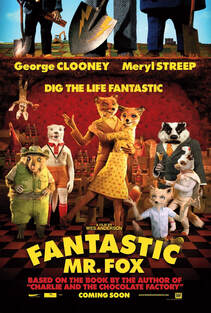
​At a lean 87 minutes, Wes Anderson’s stop motion animation Fantastic Mr. Fox (a loose adaptation of the Roald Dahl classic), manages to pull off a rare cinematic feat: offer perceptive and mature reflections upon human nature, which are framed within a ‘children’s film’ concerning mischievous woodland creatures. On paper then, Anderson’s film – featuring a heady mix of autumnal colouring, classic American pop and an obsession with symmetrical framing – just shouldn’t work. Is it a film for adults, children or both? In short, it’s a delight to be shared with everyone, but particularly those who are learning of/attempting to control the affections and desires of the “flesh”, which so often run contrary to God’s laws. But what of our anthropomorphic ‘hero’ Mr. Fox? Can or should he, a self-described “wild animal”, ever hope to overcome his animalistic tendencies in order to live a less self-centred life, for the sake of his family? Or must he simply give in to his seemingly harmless desire to place birds between his teeth?

Upon learning that his wife is pregnant with their first cub, Mr. Fox (George Clooney), a lovable rogue with a penchant for chicken thieving, makes a promise to Mrs. Fox (Meryl Streep): he will find himself an alternative, less dangerous form of employment, to ensure his family’s safety. But twelve years later, Mr. Fox’s role as a columnist leaves him feeling unfulfilled, and he misses the excitement and adrenaline brought on by his former career. Not content with living in a foxhole any longer (it makes him “feel poor”), Mr. Fox purchases a literal tree house, much to the behest of his lawyer (Bill Murray), who forewarns him that the farms of Boggis, Bunce, and Bean are in close proximity to his family home. But Mr. Fox isn’t concerned with those powerful, violent and mean-spirited men - he’s far more interested in devising and carrying out plans to rob them blind. And that he does, which his victims naturally do not take kindly, planning a retaliation for the ages. Is Foxie’s crossing over of the line, whilst exhilarating and highly amusing, worthwhile after all?
 
Fantastic Mr. Fox revels and delights in incorporating tropes of filmmaking into its frivolities. The one which appealed most to me is that of the ‘one last job’ conceit, which has influenced many a filmmaker, from Michael Mann (Heat) to Christopher Nolan (Inception). Here, Mr. Fox decides that he’s going to “secretly do one last big job on the sly”, despite sub-consciously acknowledging the threat it might pose to his family, and his marriage. Whilst his “master plan” is executed without error, leading him to amass an impressive haul, it predictably serves only to enrage the local farmers. So, when the combined workforces of Boggis, Bunce and Bean lead a ridiculous, all-out assault on Fox’s tree house, the crafty fox is forced to not only step into the role of “the quote-unquote fantastic Mr. Fox”, but also confront who he has allowed himself to become.

Picture
​​In a rare moment of quiet away from the crazed farmers, Mrs. Fox pulls her husband aside, tearfully demanding that Mr. Fox explain his reasoning for such reckless behaviour. “Because I’m a wild animal”, is his only defence. Earlier, he even struggles to attempt to justify his actions to himself and to a friend, when he says “…how can a fox ever be happy…without a chicken in its teeth?”. For Mr. Fox, he believes that it is within his inbuilt nature to want to steal, which he manipulates to excuse himself of any wrongdoing. In other words, he’s saying that ‘this is who I am’, for which he makes no apology. In a sense, this is permissible - Mr. Fox’s animalistic nature is what his creator wrote into his very being. However, this tale is allegorical, designed to convey morals to its human viewers. The animals are therefore representatives of us – humans, who unlike animals, can and do know better. So, whilst we might feel as if we are bound to our ‘human nature’, does that necessarily mean that we should act upon our every impulse?
 
According to the Bible, Mr. Fox’s misguided actions (and by extension, our own) are not always permissible – even if we feel that we were born a certain way or are doing something for the sake of our own perceived happiness. For whilst anyone can be born with a disposition towards something, and genuinely feel as if that is ‘who they are’, we aren’t always justified in the pursuit of that. For example, what if acting upon such a disposition hurts ourselves, or those we love? The Bible teaches that humanity has ultimately been born with a disposition to sin, even particular mistakes such as theft - made clear in the case of Mr. Fox, who maintains that his nature defines who he is. This is because everyone has been born with a sinful nature, which we ourselves inherited: Sin “…came into the world through one man (Adam), and death came through sin, and so death spread to all because all have sinned…” (Romans 5:12, NRSV). In Psalm 51 (ICB), we even read King David acknowledging this sinful state within himself: “I was brought into this world in sin. In sin my mother gave birth to me.”. From birth onwards, therefore, the Bible teaches that we all become “…people (who) have sinned and are (therefore) not good enough for God’s glory.” (Romans 3:23, ICB).
​
Picture
Learning that we are born with a disposition to sin, might be wrongly interpreted by Mr. Fox and humanity by and large, as a ‘get out of jail free’ card. However, the Bible teaches that just because we are fallen in nature, it doesn’t mean that we must act upon our every whim. For God hasn’t created us to be sinners – those who do whatever they like, not thinking of the consequences. In fact, the Bible teaches that just because “something is technically legal”, it “doesn’t mean that it’s spiritually appropriate” for us to engage with (1 Corinthians 6:12, MSG). But each of us, in our own ways, have chosen to give in to our sinful nature: “We all have wandered away like sheep. Each of us has gone his own (sinful) way.” (Isaiah 53:6, ICB). And in so doing, all that we receive following our life here on earth, are “…the wages of sin (which) is death” – that which leads us to spend eternity in separation from God in hell (Romans 3:23, NLT).
 
However, God teaches through His Word the Bible, that we don’t have to conform ourselves to our sinful nature. For by doing so, we will not receive the happiness or satisfaction which we or Mr. Fox seek. Just as in Fantastic Mr. Fox, all that our sin will bring upon us is disaster – both literally and spiritually, both here and in eternity. Rather, we need not act upon our sinful desires, which hurt ourselves and have the potential to hurt those around us. All that we must do, in order to “have life, and have it to the full” (John 10:10, NIV), just as Mr. Fox so desperately seeks, is come to Jesus. For whilst we have done wrong in God’s eyes by living for ourselves, He “has shown us how much he loves us” in sending Christ to die for us, taking the punishment that we deserved, even “while we were still sinners” (Romans 5:8, GNT). Through His perfect sacrifice on the Cross, Jesus has given us the opportunity, “by the Spirit”, for “you put to death your sinful actions”, so that “you will live” (Romans 8:13, GNT) forever in relationship with Him. In Christ alone, even a sinful, ‘wild animal’ such as Mr. Fox can learn to put to death “put to death…the earthly desires at work in” him (Colossians 3:5, GNT), to then truly live the life fantastic.

Challenge:
 
Why not prayerfully invite a friend or family member who doesn’t yet know Jesus, to watch Fantastic Mr. Fox for themselves? Use the film’s themes to ask them what they thought of the film, if they spotted any links to Christianity and what they might think of the Gospel’s response to this subject.

If you feel able to, ask them what they think about Mr. Fox and his pursuit of happiness – is it just harmless fun, or is it reckless, and perhaps even dangerous? Prompt them to consider the cost of Mr. Fox’s actions too – do they feel that what he accomplished was worth all of that, regardless of the consequences? Later, if they're open to hearing it, take an opportunity to share the hope of the Gospel message with them, mentioning the fact that Mr. Fox’s selfish pursuit of happiness only brought Him pain and anguish. To end, share with them about the complete happiness and fulfilment found in a relationship with Christ.

Prior to watching the film for yourself, however, take a moment to pray that God would speak to you through the film. If you feel comfortable, pray this prayer over all of your future, film-watching experiences:
 
Dear Lord, as I watch this film, I ask that you would be present here with me. Highlight to me anything within it that is honourable, anything that can be used in conversation for your Kingdom purposes. Amen.
 
Fantastic Mr. Fox is available to stream on Amazon Prime (UK).
 
1 Comment

Kickin’ Back The Bucket - The Bucket List

11/2/2020

0 Comments

 
Picture

​​Please note: The following text contains spoilers. Viewer discretion is
also advised – this film is rated ‘12’. For more details on the film’s content,
read Focus On The Family’s Plugged In review.
 
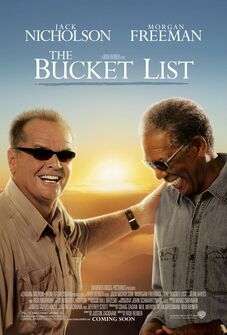
It’s been thirteen years since the release of Rob Reiner’s comedy-drama,
The Bucket List – an unapologetically schmaltzy studio film which draws upon
the legendary acting talents of two men, who at the time, were
gracefully entering into their twilight years. You know, typically breezy
Sunday afternoon programming. But when viewed for the first time in the
very serious year of 2020, the film’s aura of oversentimentality seems
excessive, and not at all sweet. And yet somehow in spite of itself, The Bucket
List
succeeds in telling an otherwise compelling story – especially
when confronting it’s viewers with weighty questions, such as: If faced with
the imminent, inevitability of your death, what would you choose to do with
​the time that is left to you?

​And for a dour year such as this, in which many people have been forced to confront their own fragile mortality when faced with a deadly virus, The Bucket List seems timely, especially in prompting us to reconsider what we value most in life, and whether or not we’re in dire need of re-examining it all-together, before we kick the proverbial bucket… 

Jack Nicholson plays Edward Cole, a corporate billionaire who one might describe as the 21st century equivalent of Ebenezer Scrooge – a ruthless businessman with little regard for people, but a strong desire to protect his financial assets, regardless of the pain he inflicts upon others. So much so, in fact, that within the hospitals owned and operated by Edward, his own regulations state that all rooms are double occupancy for the sake of cost-efficiency. This is all well and good, until Edward is unexpectedly diagnosed with cancer, and informed that he cannot have his own private room but must learn to share – much to his annoyance. Enter Carter Chambers (Morgan Freeman), Edward’s roommate and an average Joe mechanic, who cares very little for his roomie’s impolite behaviour and is perfectly content with living a ‘less is more’ lifestyle. As the two undergo various treatments, an unlikely bond slowly forms between them. But sadly, despite the best efforts of their medical teams, the pair are given just a short time to live. Rather than accept defeat, however, Carter and Edward write a list containing all of the things they have ever wanted to do before they die and embark upon an adventure of a lifetime.
 
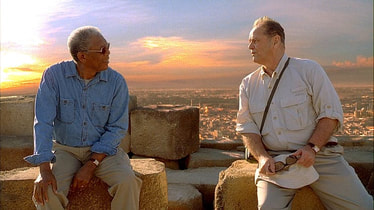
What follows is a collection of heart-warming sequences which regularly switch back and forth in genre, from the comic road movie to a spiritual journey. As their bond of friendship deepens between them, so does their trust in one another, which leads to the two men sharing poignant conversations about faith, joy, what happens after we die, and even the existence of God. There isn’t a great deal of depth to their religious/philosophical musings, but it does lead both Edward and Carter to contemplate what truly matters most to them in life. For at first, their bucket project stems from a largely self-centred desire to gift experiences to themselves, which they feel, for one reason or another, they deserve to enjoy. They go skydiving, visit the Taj Mahal, fly over the North Pole, ride motorcycles on the Great Wall of China and more… But still, in spite of the many escapades which they share with one another, something still seems to be missing in their lives. And in the quieter moments between them, the men share vulnerable tête-à-têtes regarding their flaws and regrets, subsequently revealing what they’re missing in life. For example, whilst sat atop the Great Pyramid, Carter reveals a loss of love for his wife, and Edward confesses his misguided actions which led to becoming estranged from his only daughter. The trip, whilst powerful and awe-inspiring, still can’t fill the respective voids within their life, which brings them to search for meaning and joy. 
​
Picture
In one moment, Carter asks Edward the following two questions, which Egyptian Gods supposedly would ask people: (1) Have you found joy in your life? (2) Has your life brought joy to others? If answering honestly, neither man could answer yes to both questions. Their quest is one to find joy in the world, but following the trip, Edward is left feeling alone (literally and figuratively), whilst Carter is surrounded by more important things in life which bring him joy, such as family.
 
Both men experience the joy that comes from the world, particularly Edward, who indulges in the “the fleeting pleasures of sin” (Hebrews 11:25, NLT) such as when he invites escorts to his home, but only breaks down weeping in his luxury high-rise suite, when he realises just how worthless the experience actually is. Edward and Carter’s joy (whilst the source of the latter’s is more positive overall) is still temporary no matter what they do, as health issues or the breakdown of relationships continue to rob them of their joy, in preparing for their deaths.  

King Solomon, much like Edward and Carter, attempted to find joy and happiness in the things of this world, saying: “I said to myself, "Come now, I will test you with pleasure to find out what is good." But that also proved to be meaningless… What does pleasure accomplish?” (Ecclesiastes 2:1-2, NIV). Solomon realised that the joy of the world is unfulfilling, but that the joy which the Lord brings is rich, abundant and sustains us in a way that this world never could. Today, Christians have access to that very same joy, made possible by the sacrifice of Jesus Christ on the Cross. For we were once sinners, robbed of joy and “life in all its fullness” by Satan, the “thief” who came to “kill and destroy” (John 10:10, ICB) by leading us into sin. But Jesus was sent by His Father God, to free us of the grip that sin had upon our lives, by taking our sin upon himself and destroying its power forever, when He died and rose again three days later. Through His sacrifice on the Cross, He made a way for us to be able to ask for forgiveness, become saved from eternal death apart from God, and experience a sense of joy from the Lord which can be readily present, even as we face difficulties in our life. For when we believe and know in our hearts that we are children of God, knowing that we are heirs to “a priceless inheritance” (1 Peter 1:4, NLT) which is the gift of eternal life, we can be secure in the joy of salvation He brings, not looking for such fulfilment elsewhere. Edward and Carter might eventually find their joy in family and friends, but such joy which only the Lord brings, gives us a hope for eternity – something which these two men do not have, and the filmmakers do not believe in. But when we come to God and receive His love, joy, hope and peace, we need not look elsewhere.

Challenge:
 
Why not prayerfully invite a friend or family member who doesn’t yet know Jesus, to watch The Bucket List for themselves? Use the film’s themes to ask them what they thought of the film, if they spotted any links to Christianity and what they might think of the Gospel’s response to this subject.

If you feel able to, ask them what they think about Edward's outlook on life - do they think that we can experience fullness of joy in the everyday, or do we need to look elsewhere? What about for Carter, do they think that family's enough to give us joy?  Later, if they're open to hearing it, take an opportunity to share the hope of the Gospel message with them, majoring on the complete joy of salvation which a relationship with Jesus brings to us. 

Prior to watching the film for yourself, however, take a moment to pray that God would speak to you through the film. If you feel comfortable, pray this prayer over all of your future, film-watching experiences:
 
Dear Lord, As I watch this film, I ask that you would be present here with me. Highlight to me anything within it that is honourable, anything that can be used in conversation for your Kingdom purposes. Amen.
 
The Bucket List is available to stream on Amazon Prime (UK)

0 Comments

What Good Can Come from The Shire? - The Lord of The Rings: The Fellowship of The Ring (2001)

10/19/2020

0 Comments

 
Picture
Please note: The following text contains spoilers. Viewer discretion is also advised – this film is rated ‘PG’. For more details on the film’s content, read Focus On The Family’s Plugged In review.
 
Frodo: I wish the ring had never come to me. I wish none of this had happened.

Gandalf: So do all who live to see such times. But that is not for them to decide. All we have to decide is what to do with the time that is given to us…
 
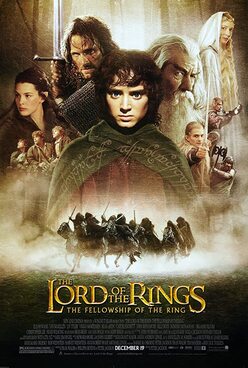
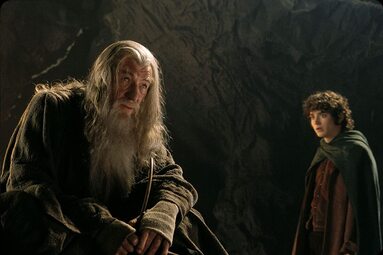
Unbelievably, 2021 will mark 20 years since Peter Jackson’s Oscar-winning The Lord of The Rings: The Fellowship of The Ring, debuted upon our silver screens. A fantasy epic quite unlike any other before it, Fellowship was not only a thrilling, technical marvel, but it also succeeded in delivering the first of three faithful adaptations of J. R. R. Tolkien’s beloved Lord of the Rings trilogy. On the surface, Fellowship (and the rest of the trilogy) perfectly embodies the archetypal tale of good vs. evil, similar to the Star Wars saga for instance. And, much like its Sci-Fi counterpart, Rings shares many a connection with key motifs of the Bible – particularly in regard to that of sin, faith and wisdom. Tolkien himself denied that his books were in fact an outright Christian allegory, but he admitted that God was certainly on his mind throughout his writing process, due to his background as a “devout Roman Catholic”. As a result of this, countless books and articles have been written to help Christians ‘find God’ in the Lord of The Rings, thereby enabling them to share the Good News with their friends. And he is indeed there – but out of all the most notable biblical connections throughout this film series, Fellowship’s embodiment of Christ shines through as the brightest.

​Without getting too carried away with explaining the intricacies of Tolkien’s plotting and the world of Middle Earth, the fundamental outline of Fellowship’s sprawling narrative is thus: Frodo Baggins (Elijah Wood) lives in the peace-filled region of The Shire, located within the north-western lands of Middle Earth. Mostly sheltered from the nefarious goings-on in distant lands, Frodo and his fellow hobbits enjoy the simple comforts of home, family and a warm hearth. But upon inheriting a mysterious gold ring which belonged to his adventurer cousin, Bilbo (Ian Holm), Frodo is informed by the wise wizard Gandalf The Grey (Ian McKellen) that it is a long-forgotten object which can be wielded in order to commit unspeakable evils. As Ring-bearer, Frodo is tasked (alongside eight companions) with destroying the One Ring, so that he might save Middle-earth from the rule of the Dark Lord Sauron.
 
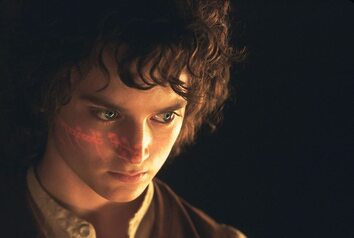
Standing at an average height of three feet six inches, Hobbits aren’t naturally well-suited to the heroic archetype so critical to fantasy narratives - from Jason and the Argonauts to Harry Potter. For instance, Frodo himself isn’t at all interested in embarking upon the quest for the sake of adventure or saving a damsel in distress, but rather, he chooses to embrace the role of a hero in order that he might save the Shire (and by extension, Middle-earth) which he so loves. He is a meek, human-like creature of average build for a Hobbit, isn’t of any nobility or great social standing, but derives instead from humble beginnings. And yet, he was nonetheless chosen for a purpose. Perhaps if we were to have chosen the hero of The Lord of The Rings, from the many colourful characters which populate the sprawling narrative, we would be more likely to have chosen the warrior Aragorn (Viggo Mortensen) or the powerful wizard, Gandalf. But Frodo was chosen because of his growing willingness to sacrifice himself completely for the sake of the world and his love for it, which naturally draws us to compare Frodo to Christ – “No one has greater love than this, to lay down one’s life for one’s friends”, John 15:13 (NRSV). Yes, he is an ‘incomplete’ Christ figure, in that he eventually allows himself to fall prey to the schemes of Middle-earth’s very own Devil, Sauron. However, Frodo makes the initial, conscious decision to submit his will to that of the one who sent him, despite the realisation that taking the Ring to Mordor would almost certainly lead to his own death - destroying first his mind, soul and then his physical body. 
​
Picture
Frodo’s noble desire to aid his fellow man in defeating the powers of darkness, is perhaps best illustrated by a scene in which Frodo, and a whole host of representatives from powerful kingdoms throughout Middle-earth, are debating whose responsibility it is to destroy the One Ring. Frodo and his fellow Hobbits are paid little to no attention, but this is especially true once those attending this council meeting, begin arguing and shouting unintelligibly. This cacophonic display of anger and hate takes centre stage, with physical fights threatening to break out before him. The council members never stop to wonder if Frodo is suited to this task, or that he could even complete it. Instead, they exclude him totally from the conversation. Frodo, accepting that this is his calling, shouts as loudly as he can above the noise: “I will take it”. His decision is not made so that he would purely receive power, glory, honour or praise, but because it is what must be done, in order to save the world.
 
Those present within the council meeting, turn to face Frodo in complete shock. To nominate the ‘halfling’ as the one who will destroy the One Ring, is preposterous to them who are men of worldly mind. And yet, both in spite of him and because of him, Frodo is later revealed to be the only one who could take the ring to Mordor, thereby accomplishing this impossible task. It is his purely noble reason for taking this difficult task upon himself (love), which allows him to succeed in the long run. But think of those who would have prevented him from embarking upon such a quest - not only would they perish, but their entire world around them would also. Such characters remind me of the Jews and Gentiles to whom Paul refers in 1 Corinthians 1:23-25 (NIV):

“…but we preach Christ crucified: a stumbling block to Jews and foolishness to Gentiles, but to those whom God has called, both Jews and Greeks, Christ the power of God and the wisdom of God. For the foolishness of God is wiser than human wisdom, and the weakness of God is stronger than human strength.

​For them, the very notion that Jesus son of Joseph from Nazareth, the carpenter’s son, would be the Messiah, the key prophetic figure of the Torah, was simply unbelievable. He wasn’t of noble birth (that they could easily deduce anyway), or exactly ‘special’ in a godly sense. And yet, He was the One sent by God to save humanity, who the Bible teaches achieved victory on the cross, submitting his will to that of His Fathers’ in Heaven. Like Frodo, Jesus’ sacrifice on the Cross “in all its weakness and foolishness when measured by human standards”, “is presented by God as His power and wisdom, both infinitely greater in saving capacity than all man’s mightiest efforts can produce” (A Bible Commentary for Today, by G.C.D. Howley et all.). Jesus was called to save humanity from the weight and grip of their sin, which was achieved through His sacrifice on the cross and subsequent resurrection. Jesus, unlike Frodo, brings perfect "completion to this task by being” the “sacrificial animal that faces death and wrath for the sake of others”. But just as it was foolishness to the ‘wise’ of Middle-earth, “…the message of the cross is foolishness to those who are perishing” (1 Corinthians 1:18, NIV) and living in rebellion to Him. To us who “are being saved” and have been saved, however, “it is the power of God” (1 Corinthians 1:18) which we experience in our lives today and for eternity. 
​
Picture
Challenge:
 
Why not prayerfully invite a friend or family member who doesn’t yet know Jesus, to watch The Lord of The Rings: The Fellowship of The Ring for themselves? Use the film’s themes to ask them what they thought of the film, if they spotted any links to Christianity and what they might think of the Gospel’s response to this subject.

If you feel able to, ask them what they think about Frodo taking on the role of saviour throughout The Fellowship of The Ring. Which qualities do they see in Frodo? Is he a perfect saviour/hero? Ask them what they think about the author/filmmaker's choice to make Frodo the hero, despite initially being the opposite of one. Do they see the parallels between Frodo and Jesus? Later, if they're open to hearing it, take an opportunity to share the hope of the Gospel message with them. 

Prior to watching the film for yourself, however, take a moment to pray that God would speak to you through the film. If you feel comfortable, pray this prayer over all of your future, film-watching experiences:
 
Dear Lord, As I watch this film, I ask that you would be present here with me. Highlight to me anything within it that is honourable, anything that can be used in conversation for your Kingdom purposes. Amen.
 
The Lord of The Rings: The Fellowship of The Ring is available to rent through Amazon Prime, Apple TV and YouTube.
​
0 Comments

The Social Deception - The Social Dilemma (2020)

10/12/2020

0 Comments

 
Picture
​Please note: The following text contains spoilers. Viewer discretion
​is also advised – this documentary film is rated ‘12’. 
 
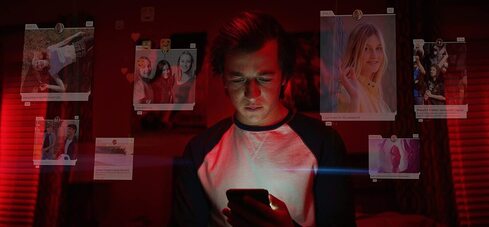
Once in a while, the streaming behemoth Netflix, releases a documentary which truly captures the minds of our binge-watching culture. Most recently, viewers were treated to the shocking, sensationalist exploits of Joe Exotic on Tiger King – a much needed reprieve from the mounting fears brought on by COVID-19, way back in March. And yet, at a time in which we’re in greater need of the levity that would come from a Tiger King sequel series, along comes The Social Dilemma… This revelatory, documentary-drama hybrid is a serious ‘entertainment’ for a serious time - relatively devoid of humour and committed to blowing the whistle on the corporations we engage with on a daily basis. In essence, this is a public service announcement which seeks to bring to light the dangerous impact that social networking has upon humans, presented by tech experts who are now disowning their own, multi-million-dollar creations, which have since taken on a life of their own…

​Over the years, the worldwide church’s response to social media has varied significantly and, at this point, is probably deserving of a case study of its own. Many have maintained the ‘be in the world, not of the world’ approach to support the responsible use of such platforms for God’s glory, whilst others criticise such use, or use it cautiously, asking “Can Your Soul Really Survive Social Media?”. Naturally, there are pros and cons to the use of Facebook or Instagram for example, but we are quickly becoming wiser to the tactics and failings of these companies, writing theological responses to the negative reactions/interactions many have on a daily basis, as a result of these products. So, the secret is out – there is now widespread knowledge available which points to social media’s ability to be significantly addictive, how it can lead us to experience mental health issues and even cause us to struggle with self-worth, due to us spending extended time comparing our lives to one another’s. Such knowledge is widespread, understood and to some extent, being positively addressed. But now, through the help of this documentary, we’ve been awoken to the reality that the technology, which is so eager to connects us, also desires and specifically works to controls us.
 
At some point, director/co-writer Jeff Orlowski must have imagined that he was at risk of sounding like a group of doomsday prophets, alerting us to the arrival of the non-fiction ‘Skynet’ of The Terminator film franchise. And in a way, you’d be forgiven for thinking that. But Orlowski smartly chooses to frame his docu-drama around the conducting of interviews with those responsible, in one way or another, for manufacturing the software of various social medias, thereby establishing the overlords of Silicon Valley. Tristan Harris, a former design ethicist at Google, leads the charge in these interviews, revealing that the algorithmic technologies which underpin the functionality of these social medias, are far more significant than we ever imagined. For not only do the algorithms possess the ability to adapt themselves based on our behaviours, but they have the power to alter our behaviours too, causing us to become enslaved by flooding our feeds with content that the algorithms know will interest us, as a result of having unlimited access to our personal data.
​
Picture

​When signing up to these social media platforms which seem so innocent on the surface, rarely do we consider the possibilities that such technologies are manipulative, have the power to influence our thinking (politically and otherwise), or potentially take control of us to lead people into sin. But the Bible specifically warns against such carelessness, especially when the writer of 1 Peter encourages their readers in this way: “Be alert, be on watch! Your enemy, the Devil, roams around like a roaring lion, looking for someone to devour” (1 Peter 5:8-9, GNT). The Bible knows that the Devil will do anything within his power to entice us into making poor decisions, in order that he might entrap us within sinful patterns, thereby preventing us from connecting with God. So often, people (I included) will choose to ‘sign up’ to something which looks good on the surface, without actually digging deeper to determine whether they’re making the right decision or not. And that, the Bible teaches, is where we have all gone wrong - “everyone has sinned” (Romans 3:23, NLT) against God, and have therefore “fall(en) short of God’s glorious standard” (Romans 3:23, NLT) for the way He desires us to live our lives. So not only does the darkness which comes with sin, enter into a person’s life, but it also begins to control and blind them, prompting the Devil to specifically disrupt their lives:

​“They do not believe, because their minds have been kept in the dark by the evil god of this world. He keeps them from seeing the light shining on them, the light that comes from the Good News about the glory of Christ, who is the exact likeness of God.”
​(2 Corinthians 4:4, GNT)

​Shockingly, the film informs us that the AI technology, which is built into the framework of these apps, is inbuilt with the psychology of persuasion, to be used in its day-to-day activities. The primary goal of social media, therefore, is to convince us to spend as much time logged into it, as humanly possible. It works to specifically jolt us into action, keep us there for extended periods of time and then reinforce those behavioural patterns with rewards, in order to force us into a place of addiction. Tech engineers don’t want us to tire of social media, but rather, they would like us to remain hooked by it, and dependent upon it – sending us into a ‘dopamine deficit’ state when we’re not online. The tactics of the Devil are just the same – he would like nothing more than to see people completely enslaved by sin. And he often achieves this because “he is a (talented) liar and the father of all lies” (John 8:44, GNT) who will go to great lengths in order to deceive and tempt us to given into our sinful nature. But in succumbing to such temptations, the Bible teaches that we will become enslaved by sin’s binding grip, and eventually receive “the wages of sin (which) is death” (Romans 6:23, NLT) for all of eternity – separated from God as punishment for our sins.
​
Picture

​So just as in the drug and social media industry, who are two of the few industries to call their customers “Users”, we too have become users who are addicted to sin. But the Bible teaches that even though we have permitted our lives to be dictated by sin, “God has shown us how much he loves us” by sending Christ to die for us, taking the punishment that we deserved, even “while we were still sinners” (Romans 5:8, GNT), to make a way for us to ask for forgiveness from God and be saved from our eternal punishment. But this was only achieved through Christ alone, God’s one and only Son, who was given over to be crucified on the cross, as the “…offering for our sin”, so “that we could be made right with God through Christ” (2 Corinthians 5:21, NLT). Thus, the Bible makes it abundantly clear that God doesn’t want us to be enslaved to sin, but free to live in relationship with Him – both now and in eternity in Heaven with Him. It was “for freedom that Christ has set us free” (Galatians 5:1, NIV) – that we might be connected with God, the source of all life, not that we might be controlled. We might be users online, but do we want sin to use us?

Challenge:
 
Why not prayerfully invite a friend or family member who doesn’t yet know Jesus, to watch The Social Dilemma for themselves? Use the film’s themes to ask them what they thought of the film, if they spotted any links to Christianity and what they might think of the Gospel’s response to this subject.
 
If you feel able to, ask them what they think about the manipulative nature of these social medias. Do they ever feel manipulated whilst using them? Ask them what they think about the Devil’s aim to manipulate us without realising it, do they believe that God seeks to free us when we fall into temptations from the Devil? Later, if they're open to hearing it, take an opportunity to share the hope of the Gospel message with them - perhaps focus on how the Bible teaches that "If anyone belongs to Christ, then he is made new. The old things have gone; everything is made new!" (2 Corinthians 5:17, ICB).
 
Prior to watching the film for yourself, however, take a moment to pray that God would speak to you through the film. If you feel comfortable, pray this prayer over all of your future, film-watching experiences:
 
Dear Lord, As I watch this film, I ask that you would be present here with me. Highlight to me anything within it that is honourable, anything that can be used in conversation for your Kingdom purposes. Amen.
 
The Social Dilemma is available to stream exclusively on Netflix.

0 Comments

Rest for The Weary and Burdened - The Mission (1986)

10/4/2020

0 Comments

 
Picture

Please note: The following text contains spoilers. Viewer discretion
​is also advised – this film is rated ‘12’. 

Take a moment to try and name a film score more famous than the film it’s from. It’s tough, isn’t it? We’ve been treated to some incredible film scores over the years - from John Williams’ Star Wars: A New Hope, to Howard Shore’s The Lord of The Rings trilogy. But the films which accompany these scores are arguably equalled in their greatness. However, it’s the work of the late, great Ennio Morricone from The Mission, which has truly taken on a life of its own – ascending to greatness, whilst the film itself has somewhat faded into obscurity. The film has been critically reassessed over the years (and rightly so), but it’s Morricone’s title theme, “Gabriel’s Oboe”, which embodies the film’s central idea of what it must be like to ascend from the darkest, most sinful depths, and into the sinless, heavenly realms in union with God.

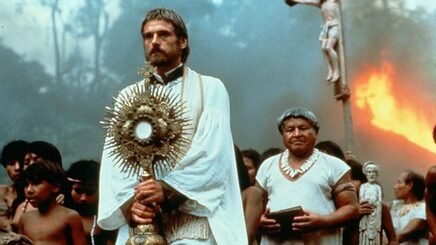
​Ostensibly, The Mission is formed around a conventional redemption narrative. Yet the film itself is anything but conventional. Reportedly based on actual events, The Mission details the experiences of a Jesuit missionary named Gabriel (Jeremy Irons), as he goes about his ministry in 18th-century South America. Despite facing many a danger, Gabriel seeks to build a mission station within the Paraguayan jungle, with the specific intention of sharing Jesus with the indigenous Guaraní community. He narrowly avoids execution at their hands, but successfully establishes himself as part of the community, when the tribe learn that he is a man of peace and not a violent slave trader, who mercilessly operate in their region. By chance, Gabriel visits a local church and crosses paths with a mysterious slave trader, named Rodrigo (Robert DeNiro) – a man of violence, rage and without mercy. In jealous spite, the mercenary is revealed to have killed his brother in a duel, but is now overcome with guilt and sorrow, hiding away from the world in shame. Gabriel, moved by compassion, makes Rodrigo an offer - one that he believes will bring the redemption which Rodrigo doubts is attainable, but so desperately seeks.
 
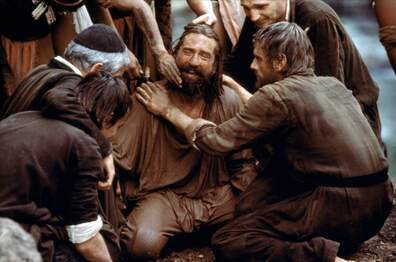
In order to seek repentance and restitution for his unspeakable actions, Gabriel charges Rodrigo with accompanying the Jesuits back to camp, dragging along with him a large net packed full of armour and weapons – the physical embodiment of his sordid past and sin. The journey is perilous, and Rodrigo stumbles at every hurdle. He becomes muddy, beaten, bruised. All that he carries with him are burdens, which become caught on the side of a cliff face, or submerged in water, holding him back from reaching his destination. And yet, against all odds, he arrives at the feet of the Guaraní community – the very people he abused and enslaved. They recognise him almost immediately, watching as he struggles with the netting, to which a tribesman responds by holding a knife to his throat. The tribespeople hurriedly communicate with one another, in this heart-stopping moment of tension. Suddenly, the knife is removed, and the Guaraní sever the rope which connected Rodrigo to his netting, pushing it off the cliff and into the watery depths below. Rodrigo lifts his head in confusion, crying and laughing in utter disbelief. He is free.
​
Picture

​​Has there ever been a more straightforward, yet bewildering picture of grace ever put to film? I tend to doubt it. Why? Well for one, this sequence (whilst short) acts as a perfect definition of what grace is. Simply put, grace is favour extended towards those who are unworthy to receive it. And in this film, who is more unworthy to receive grace than Rodrigo? He has killed and enslaved his fellow man without thinking once about the consequences – robbing people of their loved ones and burdening himself with the weight of guilt in the process. And yet, the Guaraní extend to him that graceful favour, which is completely unwarranted. In fact, they not only permit Rodrigo to live, but live amongst their community in harmony, supporting him as he becomes a new man in Christ.
 
In the eyes of the world, this logic simply doesn’t make sense. Surely, Rodrigo should plunge to his death at the falls. That would be justice served, wouldn’t it? An eye for an eye… etc. But somehow, the Guaraní find the strength to do as Jesus himself instructed them: “Be merciful, just as your Father is merciful” (Luke 6:36, NLT). Having been taught the Scriptures and dedicated their lives to God, the Guaraní understand that they too were just as broken, lost and fallen as Rodrigo. They spared his life because they realised, they were once no better than him. Both Rodrigo and the Guaraní were guilty of breaking God’s holy laws – “for everyone has sinned; we all fall short of God’s glorious standard” (Romans 3:23, NLT). In their rebellion, both were no better than enemies of their creator, deserving eternal punishment as a result of their sin – “For the wages of sin is death, but the free gift of God is eternal life in Christ Jesus our Lord” (Romans 6:23, NLT). By all accounts, Rodrigo, the Guaraní and us - humanity itself - are therefore guilty in accordance with God’s laws. Even us, who have not committed the atrocities of certain characters throughout this film, are in fact at fault in God’s eyes. But it was “…by grace (Rodrigo and the Guaraní)…have been saved” and “through (putting their) faith” in God (Ephesians 2:8, NIV).
​
Picture
Grace is the underserved favour extended to Rodrigo and the Guaraní, but also humanity, which saves its recipients from the binding grip of sin in their lives. But this grace is not a distant, far-off concept that we are unable to see or understand. No, Jesus is the embodiment of that grace - the One who grants forgiveness to anyone who turns from their sin, their old life and comes to faith in God. He grants us mercy because of His matchless love for the world, and “gives…the free gift of life forever” (Romans 6:23, ICB) as a promise to those who follow Him. But this was only achieved through Christ alone, God’s one and only Son. He was given over as a sacrifice in our place (taking the punishment we deserved), crucified on the cross as the “…offering for our sin”, so “that we could be made right with God through Christ” (2 Corinthians 5:21, NLT).
 
The Bible teaches that we, like Rodrigo, carry our own packs – filled with our sin, shame and guilt. They’re heavy and hold us back from experiencing true freedom (now and in eternity), which the Bible teaches is found in relationship with Jesus Christ. Try as we might to remove them from us, those packs are firmly secured to our backs – there’s nothing we can do, such as trying to be a ‘good person’, in order to avoid our eternal fate. For Romans 3:20 (ICB) teaches that “no one can be made right with God by following the law”, or put simply, the rules for which God intended that we follow. We need Jesus, like the Guaraní tribesman, to cut our pack from us, asking for and receiving forgiveness for our sin, and then entering into an eternal relationship with Him. And He does this even when we, like Rodrigo, have done nothing to deserve such mercy. But that is the scandal of grace – that “God has shown us how much he loves us” in sending Christ to die for us, taking the punishment that we deserved, even “while we were still sinners” (Romans 5:8, GNT). Through Christ alone, we can live a burdenless life, in the sense that sin no longer holds us back, and we are freed to experience eternity of life when we pass away, and not death. Thank you, God, that whilst such great a mercy might not compute with humanity’s thinking, your grace remains nonetheless true and liberating, as it was for Rodrigo.

Challenge:
 
Why not prayerfully invite a friend or family member who doesn’t yet know Jesus, to watch The Mission for themselves? Use the film’s themes to ask them what they thought of the film, if they spotted any links to Christianity and what they might think of the Gospel’s response to this subject.
 
If you feel able to, ask them what they think about Rodrigo's life being spared, at the hands of the Guaraní - do you think he deserved such mercy, or should he have been punished for his crimes? Ask them what they think about Rodrigo's redemption and the complete changing of his ways - is such a thing possible, or is it just wishful thinking? Later, if they're open to hearing it, take an opportunity to share the hope of the Gospel message with them - specifically focus on how the Bible teaches that "If anyone belongs to Christ, then he is made new. The old things have gone; everything is made new!" (2 Corinthians 5:17, ICB). 
 
Prior to watching the film for yourself, however, take a moment to pray that God would speak to you through the film. If you feel comfortable, pray this prayer over all of your future, film-watching experiences:
 
Dear Lord, As I watch this film, I ask that you would be present here with me. Highlight to me anything within it that is honourable, anything that can be used in conversation for your Kingdom purposes. Amen.
 
The Mission is available to purchase on DVD/Blu-Ray or rent through YouTube. 
​
0 Comments

The Invisible Life Made Visible - A Hidden Life

9/28/2020

1 Comment

 
Picture
Please note: The following text contains spoilers. Viewer discretion
​is also advised – this film is rated '12'.
 
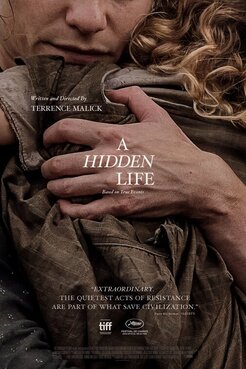
Films are rarely as quiet, contemplative and visually resplendent
as Terrence Malick’s A Hidden Life. From Days of Heaven to The Tree of
Life
, Malick has crafted visual feasts for the eyes which are at
once ethereal, but completely real. His landscapes are Eden-like
utopias, free of darkness and teeming with life. And such is the case with
A Hidden Life, Malick’s long-gestating WWII project, which artfully
depicts the life of Austrian Franz Jägerstätter - a conscientious
objector during World War II who, at the age of 36, was put to death for
his refusal to fight for Nazi Germany. A committed Christian, Franz’s
life was marked by devotion to the Lord, and his refusal to side with
evil led to him being declared a martyr and beatified by the
Catholic Church in 2007.

Whilst his sacrifice was relatively unknown for a number of years,
Malick’s film highlights this courageous act of defiance and the
abuse Franz endured, in a manner which many have commented
shares parallels with issues of the present day. However, I felt that the primary interest of Malick’s film is to display sin and darkness as the destructive forces which “so easily entangles” (Hebrews 12:1, NIV) us.  

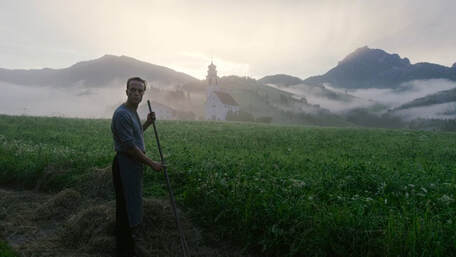
​Set in the idyllic village of St. Radegund, Austria, A Hidden Life donates a large portion of its runtime to witnessing our characters as they till the land or watch the world go by. For the impatient, these protracted, wordless scenes could be viewed as frustrating. But Malick’s gliding, swirling camera captures the beauty and sounds of nature and the bond between the village’s inhabitants so well, that you can’t help but long to visit there. Upon the breakout of war, however, we suddenly hear the harsh sounds of planes roaring overhead and the arrival of trucks filled with soldiers, which forcibly intrude upon this seemingly perfect world. The enchanting beauty of St. Radegund is soon overshadowed by a sense of darkness and heaviness, which seeps into the local community – turning friend against friend as the Nazi’s spread ideologies which cause people to hate.
 
When Franz is later confronted with evil at his door, embodied in a local fascist who persistently berates him for not “supporting the war effort”, and pledging allegiance to Adolf Hitler’s Germany, he is simply unable to make sense of it all. “Don’t they know evil when they see it?”, a friend asks in total disbelief. It’s in these scenes that I spent time considering how painful it must have felt, as a Christian in particular, to watch an oppressive regime rise up unexpectedly around you, attempting to force you into standing for something you were called to stand in direct opposition against. I was surprised that such blatant evil could find itself accepted by so many, but the Bible teaches that we shouldn’t be:

“Satan, who is the god of this world, has blinded the minds of those who don’t believe. They are unable to see the glorious light of the Good News. They don’t understand this message about the glory of Christ, who is the exact likeness of God.”
(2 Corinthians 4:4, NLT)

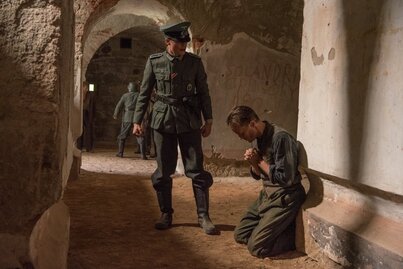
​The majority of the inhabitants of St. Radegund, once a kind and close-knit community, are seemingly blinded to the goodness that they once stood for – that so many would profess to believe in, as Christians. As Franz’s wife, Franziska (Valerie Pachner), makes her way into the village to collect supplies, she finds herself excluded from conversations entirely and stared at with haughty eyes – “Why are you staring at me like that?”, she says perplexed. These feelings towards the Jägerstätter’s are only intensified, when Franz (as a result of prayer and fasting, his biography states) refuses to swear an oath of allegiance to Adolf Hitler and the Third Reich, when he’s called up to fight alongside fellow men of his village. Despite having initially wrestled with his decision and sought advice from various members of the Catholic Church, Franz commits fully to that which he knows to be right and is almost immediately seized, incarcerated, and left to await trial.
 
For the remainder of the film, we spend much time with Franz as he is bullied, tortured and forced to live out his day-to-day life with extreme restrictions put in place. He makes the most of the little freedom that he has, in gazing upon God’s creation throughout his daily exercise or writing to his beloved wife and family. The oppressive nature of his incarceration is almost unbearable to watch, let alone experience it for ourselves. And yet, Franz is given many opportunities to sign the oath of allegiance – the act of which he is told will set him free. But he never signs this piece of paper – much to the bewilderment of his attorney and us, the audience. “Sign this paper and you’ll go free,” his attorney tells him. “But I am free,” Franz says firmly.
​
Picture
​
​A Hidden Life could therefore be classed as a tale of positive rebellion. Franz’s defiance to compromise upon his faith and betray Christ and His teachings, is a result of his life being changed by the life-saving power of God. His dedication to praying alongside his wife, and holding the Bible closely as the couple’s “book of reference for everyday life”, meant that Franz was not only a new creation in Christ, but was seeking to be transformed into His perfect image. In doing so, Franz also knew and understood that to refute God’s teachings (thereby sinning against God and his neighbour), would mean to imprison oneself in the binding grip of sin, leading to an eternal death even after death in this life. For James 4:17 (NLT) teaches us that “…it is sin to know what you ought to do and then not do it”. So, despite sacrificing his physical freedoms for that which he knew to be right, Franz chose to and was able to trust in the promises of God, because of a depth of relationship between him and the Father. Franz’s defiance in the face of sin, though he knew it would cost him everything, will bring him life everlasting in Heaven. For Jesus taught, “if you give up your life for me, you will find it” (Matthew 10:39, NLT).
 
Franz’s rebellion against the darkness which surrounded him, acts as a bold embodiment of the rebellion against evil and our fallen natures, which Jesus Himself has called humanity to. We could live in the comfortability which comes with our sin, and a general acceptance of the evils which surround us, but it is God’s will that we rebel against “evil rulers and authorities of the unseen world” and “against mighty powers in this dark world” (Ephesians 6:12, NLT). But each and every one of us has ultimately invited such darkness into our lives and compromised ourselves in so many ways. For the Bible teaches that “everyone has sinned” (Romans 3:23, NLT) and done wrong in God’s sight. In fact, every one of us have “fall(en) short of God’s glorious standard” (Romans 3:23) for the way we should live our lives. Therefore, we deserve to receive the “payment for sin (which) is death” (Romans 6:23, ICB), in accordance with God’s law.
​
Picture

​Biblically speaking therefore, humanity cannot avoid eternal death as a result of our sin – because no matter what we do, we cannot free ourselves from sin’s effects which severely effects our lives both here, and in eternity. But God, in His great love for the world, is merciful, and “gives…the free gift of life forever” (Romans 6:23, ICB) to anyone who asks for forgiveness from their sin, turns away from their old life and comes to faith in God. It was through Christ alone, God’s one and only Son, who's life was cruficified on the cross as a sacrifice - the “…offering for our sin”, so “that we could be made right with God through Christ” (2 Corinthians 5:21, NLT). Just as God gave Franz the strength to rebel against the darkness which surrounded him, so too has he made a way for us to rebel against and be freed from sin’s imprisonment of the soul and be united in relationship with Him today.
 
Challenge:
 
Why not prayerfully invite a friend or family member who doesn’t yet know Jesus, to watch A Hidden Life for themselves? Use the film’s themes to ask them what they thought of the film, if they spotted any links to Christianity and what they might think of the Gospel’s response to this subject.
 
If you feel able to, ask them what they think about Franz being prepared to die for what he knew to be right – was he justified in his decision, or misguided? What do they think about being prepared to give up one’s life, for something/someone greater than themselves? Jesus said, “there is no greater love than to lay down one’s life for one’s friends” (John 15:13, NLT). But Jesus, despite not even knowing us, laid down His life for humanity to free us from imprisonment of the soul – how does that make your friend feel? Later, if they're open to hearing it, take an opportunity to share the hope of the Gospel message with them.
 
Prior to watching the film for yourself, however, take a moment to pray that God would speak to you through the film. If you feel comfortable, pray this prayer over all of your future, film-watching experiences:
 
Dear Lord, As I watch this film, I ask that you would be present here with me. Highlight to me anything within it that is honourable, anything that can be used in conversation for your Kingdom purposes. Amen.
 
A Hidden Life is available to rent through Amazon Prime Video
​
1 Comment

The Father's Love - Life Is Beautiful

9/21/2020

0 Comments

 
Picture

​Please note: The following text contains spoilers. Viewer discretion is also advised – this film is rated '12'.
 
La vita è bella (or Life Is Beautiful) is a vastly impressive tightrope act of filmmaking – one seldom seen in contemporary cinema. Despite the controversies surrounding his Oscar-winning film, director, co-writer and star Roberto Benigni (Italy’s Charles Chaplin, no contest) beautifully orchestrates a cinematic feat of balancing humour and naturalistic emotion, in a film which sensitively addresses the atrocities of the Holocaust. Naturally, the pairing of humour and the horrors of a historical tragedy are not typically best suited to one another, but somehow, Benigni crafts an emotional portrayal of fatherhood which not only works, but contains striking similarities to the Father’s love for His creation and His desire to protect us from darkness.

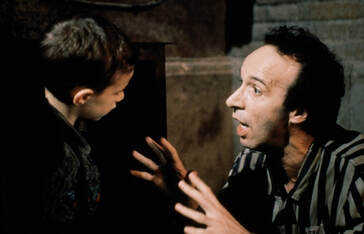
​Initially set in 1930s Italy, La vita è bella introduces us to the playful, good-natured Jewish bookkeeper, Guido (Benigni), who after successfully sweeping a beautiful woman named Dora off her feet, begins a family and leads a truly idyllic life. Upon the outbreak of war, however, Italy falls under occupation by German forces, the family are seized and subsequently find themselves interned within a Nazi concentration camp. In order to protect his son Giosuè from the horrors of his surroundings, Guido employs his rich imagination to create a game in which Giosuè must complete challenges to earn points – a process which, unbeknownst to him, shields him from death itself.
 
For a film which addresses such difficult subject matter, Benigni handles even the most troubling content with sensitivity, revealing various plot developments through implication, rather than outright revealing bloody violence or injury detail, on screen. We do learn, however, that many atrocities are committed throughout the scenes set within the camp, which dramatically alters the tone of the film in its final third. And whilst the shift in tone invites deep sadness and even righteous anger at the injustices depicted on screen, such a development really allows the film’s overarching motifs to be made known.
​​Most notably, Benigni homes in upon the biblical themes of sacrificial love, protection from darkness, salvation and restoration. In shielding his son from violence and almost certain death at the hands of the Nazi’s, Guido embodies the Father’s resolute desire to protect humanity from evil and the destructive powers of sin, at all costs. For we know it is God’s will that each and every one of us are saved and set apart from the darkness of this world, coming to Him alone for protection and ultimately salvation. The Bible even teaches that for those who draw close to Him, “He has rescued…from the power of darkness and transferred” them “into the kingdom of his beloved Son” (Colossians 1:13, NRSV). Rather than leave us to the mercy of such darkness in our lives and world, God chose to send His one and only Son as a sacrifice who would not only shield us from the evils of sin, but destroy its power forever, in making a way for us to be saved from the evils of sin.
Picture
And yet, that salvation comes at a great cost. Romans 3:23 (NIV) teaches "For all have sinned and fall short of the glory of God”, which means that each and every one of us have been touched by the darkness of this world. We have all succumbed to its temptations and done wrong in His eyes, choosing to fulfil our own selfish desires over God’s. And Romans 3:10 (NIV) even confirms this, when it plainly states: "There is no one righteous, not even one." We therefore deserve to receive the “payment for sin (which) is death” (Romans 6:23, ICB), and the cost to free ourselves is so much, that we couldn’t possibly pay it through our own means. But there is Good News for all. Romans 5:8 (NLT) gives us hope, in revealing that “God showed his great love for us by sending Christ to die for us (on the cross) while we were still sinners”, so that we might enter into eternal life with Him. But the cost of being saved is so great, that it could only be paid through an act of sacrificial love, much like that of Guido when he sacrifices his life for his son’s. It costs Guido everything, but his beloved son lives into maturity, experiencing salvation and liberation from unprecedented evil. This is reminiscent of John 3:16 (ESV), which says “For God so loved the world, that he gave his only Son, that whoever believes in him should not perish but have eternal life.” For whilst Guido’s sacrifice results in him saving his son in the physical, Jesus’s sacrifice is much weightier, for it is the power to save all people and give them fulness of life now, but also in eternity.
 
Challenge:
 
Why not prayerfully invite a friend or family member who doesn’t yet know Jesus, to watch Life is Beautiful for themselves? Use the film’s themes to ask them what they thought of the film, if they spotted any links to Christianity and what they might think of the Gospel’s response to this subject.
 
If you feel able to, ask them what they think about Guido’s act of sacrificial love, for his son – how did it make them feel? Is this a father’s love for their child, taken to the fullest extent? What do they think about God and His desire to protect them from evil, in sending His one and only Son to save them? Later, if they're open to hearing it, take an opportunity to share the hope of the Gospel message with them.
 
Prior to watching the film for yourself, however, take a moment to pray that God would speak to you through the film. If you feel comfortable, pray this prayer over all of your future, film-watching experiences:
 
Dear Lord, As I watch this film, I ask that you would be present here with me. Highlight to me anything within it that is honourable, anything that can be used in conversation for your Kingdom purposes. Amen.
 
Life Is Beautiful is available to rent through Amazon Prime Video and Apple TV
​

0 Comments

​Free Burma Rangers - Faith & Courage Under Fire

9/14/2020

1 Comment

 
Picture

​Please note: The following text contains spoilers. Viewer discretion is also advised – this film is currently unrated in the UK, but would likely to be classified '12'. 
 
“De Oppresso Liber”, “Free the Oppressed”
 
I must confess, Christian films aren’t my idea of a good time. Whilst I never stand in direct opposition to the ever-growing behemoth that is the Christian film industry, I just can’t sit through or subject others to sit through, bad Christian films. And sadly, the bad more than often outnumber the good. So, when Free Burma Rangers was recommended to me by a friend, I almost immediately cast it aside. That is, until I saw the trailer, complete with its pulse-pounding score, explosive archival footage and a distinctly Gospel-centric message of hope: “We’re not going to leave you - because you count”.

I sat back in shock, unlocked my phone and searched for where it was available to rent, only to discover it was listed solely on Amazon, for £20. But even with a hefty price tag such as this, don’t let it dissuade you from watching this film – not only is it an essential tool for evangelism, but this true story of the Eubank family is guaranteed to encourage you to pray for personal growth in compassion, unlike any other film before it.

In essence, Free Burma Rangers is a documentary, comprised of interviews and videoed first-hand accounts of activities from within war zones, in which Christian missionaries Dave & Karen Eubank (and their three young children), seek to display their faith in action, by tending to the plight of the helpless, who are caught up in conflict. With the majority of its footage taken from the charity’s own archive, Free Burma Rangers gives audiences unprecedented access to view moments of searing loss, but also the lifesaving and life-changing care and attention, given to those who have been treated as the least.  

Picture
Whilst the Eubank’s ministry is described as “a multi-ethnic humanitarian service movement”, their roots are firmly established in biblical teachings and live by six, key principles:
​

- Love One Another
- Unite for Freedom, Justice, and Peace
- Forgive and do not hate each other
- Pray with faith
- Act with Courage
- Never Surrender

In this way, the work displayed throughout FBR embodies all of these principles and more. Even in the aftermath of a brutal attack upon defenceless women, at the hands of the Burma army, we watch as Dave forgives them, despite openly acknowledging that he wishes to seek vengeance, and wrestles with his decision. But it’s in knowing that he is called to “forgive one another, as God has forgiven” him “through Christ” (Ephesians 4:32, GNT), that Dave presses on in the work that he was originally called to do – for “vengeance is mine”, says the Lord (Deuteronomy 32:35, NRSV). Such heart-rending vulnerability not only gives us an indication of the hardships that FBR face on a regular basis, but it furthers one of the film’s many points: that despite knowing God personally, we will face many hardships, but He is more than able to see us through each and every one.

The film’s central message, however, is perhaps wrapped up in the motto of the United States Army Special Forces (in which David formerly served), later adopted by the ministry, which comes closest to making a biblical comparison: “De Oppresso Liber”, “Free the Oppressed”. Whilst some argue that the motto most resembles a quote from St. Augustine, I feel that it links much more closely with the writings of the prophet Isaiah:


​“…learn to do good; seek justice, rescue the oppressed,
defend the orphan, plead for the widow.”
(Isaiah 1:17, NRSV)

​From the footage we see, rescuing the oppressed is FBR’s sole concern. Regardless of the large-scale, heavily armed threats that they face, Dave and Karen press on in the face of danger towards the sounds of guns, and the cries of the oppressed. Their courage and determination to bring healing – physically, emotionally and spiritually – whilst under fire, is a powerful testament to their faith, and willingness to truly implement biblical teachings in their life. Of course, the couple could have chosen a life of comfortability in the United States, over the harder path of the missionary lifestyle, in Burma, but they chose to obey and pursue the call of God on their lives. And God, in His care and faithfulness, has even led them to play a key role in the liberation of Mosul (Iraq) in 2017, through which many lives who were previously left for dead due to the sheer onslaught of enemy forces, were miraculously saved.
 
And in a sense, Jesus was sent just as the Eubanks were – called to go into a place of brokenness and hopelessness, to rescue the oppressed. How do we know this? Well, whilst in Nazareth, Luke’s Gospel account informs us that Jesus visited the synagogue, and read from the book of Isaiah, in which He states the following:

​“The Spirit of the Lord is upon me, because he has anointed me to bring good news to the poor. He has sent me to proclaim release to the captives and recovery of sight to the blind, to let the oppressed go free…”
(Luke 4:18, NRSV)

​In this moment, Jesus isn’t simply reading and referencing a passage from Isaiah 61, but He’s making a declaration: God has called Him to do this work described within the scripture. Despite being the Son of God, this is His calling and mission for which He was sent to earth to complete. Much like the Eubank family, Jesus was instructed by His Father to abandon comfortability, in order to save those who could not save themselves. But Jesus went further than the Eubank’s ever could, when He denied himself of His heavenly throne, of which He is worthy to inherit. He was even beaten, tortured and crucified upon a cross, in order to save humanity from oppression unlike anything in the physical. And yet, Jesus paid the ultimate sacrifice, because humanity was oppressed by the weight and grip of our sins upon our lives and needed to be freed.
 
For the Bible teaches that “everyone has sinned” (Romans 3:23, NLT) and ultimately done wrong in God’s sight. Every one of us “fall short of God’s glorious standard” (Romans 3:23) and therefore deserve to receive the “payment for sin (which) is death” (Romans 6:23, ICB), in accordance with God’s law. We deserve nothing more than to receive eternal death in Hell for our sin – for no matter what we do, we cannot free ourselves of our mistakes and their effects on our lives. But God, in His great love for the world is merciful, and “gives…the free gift of life forever” (Romans 6:23, ICB) to those who ask for forgiveness from their sin, turn away from their old lives and come to faith in God. For He loves us and wants for us to live with Him for all eternity, which is why it is written that He “does not want anyone to be destroyed, but wants everyone to repent” (2 Peter 3:9, NLT). God actually chose to make a way for us to be granted mercy, forgiveness and freedom from our sin, through Jesus Christ – God’s one and only Son who was given as the “…offering for our sin, so that we could be made right with God through Christ” (2 Corinthians 5:21, NLT).
​
Picture

​FBR therefore serves a dual purpose: whilst it encourages Christians to tend to the immediate needs of the oppressed, I believe it also helps to better understand and visualise something of Jesus’ commitment to saving all who were oppressed by an affliction of the soul - regardless of the personal cost. FBR therefore embodies that self-same mercy and compassion, so it is my prayer that many Christians would not only see that but receive it and point people to their need for liberation from an oppression of the soul.
 
Challenge:
 
Why not prayerfully invite a friend or family member who doesn’t yet know Jesus, to watch Free Burma Rangers for themselves? Use the film’s themes to ask them what they thought of the film, if they spotted any links to Christianity and what they might think of the Gospel’s response to this subject.
 
If you feel able to, ask them what they think about Dave and Karen’s commitment to sharing the Gospel and freeing the oppressed, despite facing such dangers? What do they think about God wanting to liberate us, by sending His Son into our broken world, despite knowing the cost, in order for us to be saved? Later, if they're open to hearing it, take an opportunity to share the hope of the Gospel message with them.
 
Prior to watching the film for yourself, however, take a moment to pray that God would speak to you through the film. If you feel comfortable, pray this prayer over all of your future, film-watching experiences:
 
Dear Lord, As I watch this film, I ask that you would be present here with me. Highlight to me anything within it that is honourable, anything that can be used in conversation for your Kingdom purposes. Amen.
 
Free Burma Rangers is available to rent through Amazon Prime Video
​

1 Comment
<<Previous
Forward>>
    Subscribe here

    Articles written by
    Scott Gentry

    ​[email protected]

    Cinema has been a huge part of my life for as long as I can remember. It's thrilled me, challenged me, and even been used by God to draw me closer to Him.
    ​
    Now, in every film-watching experience, I try to remember the advice of John Calvin, who said not to be dismissive of truth wherever it shall appear, which I can in turn champion and use for God's purposes.
     
    ​Inspired by Calvin's words, I was eager to begin talking about the 'good' that appears in film, so that others can not only discover it, but share it for the sake of the Gospel. It's for that reason that this blog now exists, and I pray that these articles will bless you in your evangelism.


    ​Scott's Favourite Films:
    - True Grit (2010)
    - Barry Lyndon (1975)
    - Once Upon A Time In The West (1968)
    -  The Treasure of the Sierra Madre (1948)
    - On the Waterfront​ (1954)
    - Won’t You Be My Neighbor? (2018)
    - The Mission (1986)

    Archives

    November 2022
    June 2022
    March 2022
    January 2022
    December 2021
    November 2021
    October 2021
    September 2021
    August 2021
    July 2021
    June 2021
    May 2021
    April 2021
    March 2021
    February 2021
    January 2021
    December 2020
    November 2020
    October 2020
    September 2020
    August 2020
    July 2020
    June 2020

    Categories

    All

    RSS Feed

Training
Emerging Evangelists Institute
History Makers
Who are you following?
​
Sharing Jesus
​Join us on the streets?
Donate
More about us
Contact us
Newsletters
​Privacy Notice